
July 9, 2026
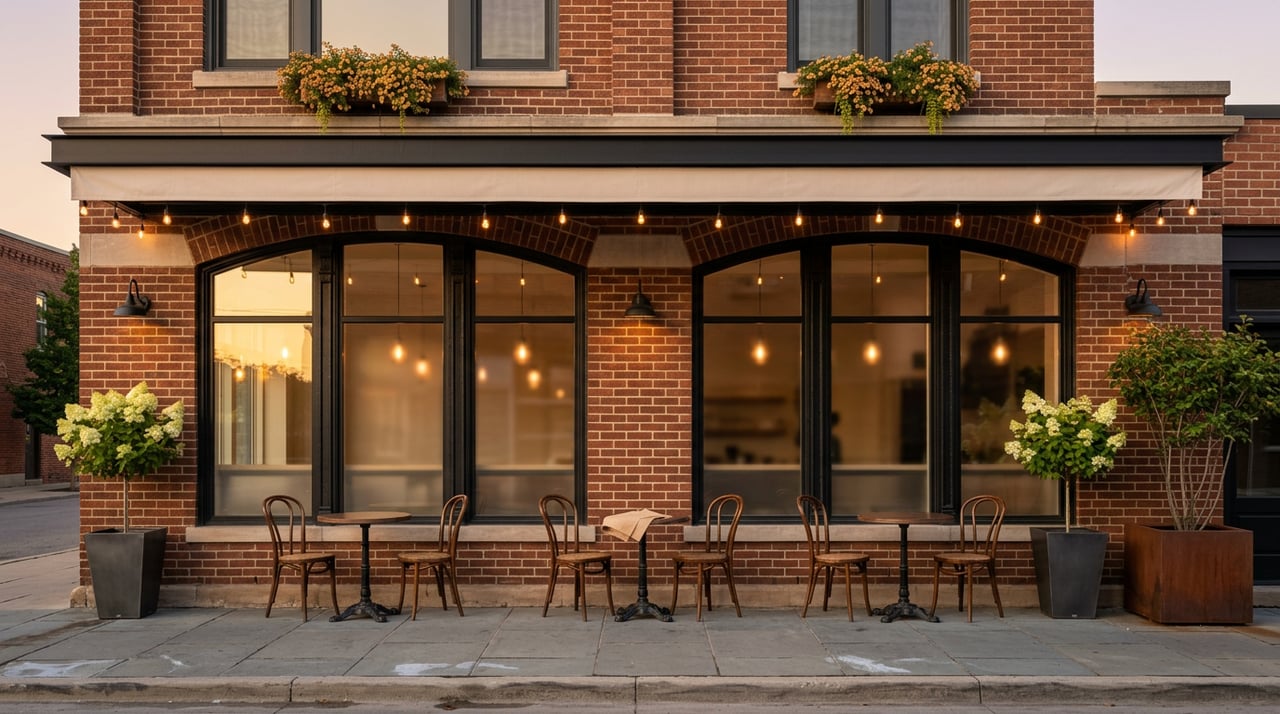
Downtown White Bear Lake does not treat summer as a sequence of isolated events. From Thursday through Sunday, the compact district around 3rd Street, 4th Street, Banning Avenue, Washington Square and Railroad Park changes function in stages.
Thursday is the full street takeover. Friday resets the district around food, coffee and smaller merchant programming. Saturday shifts attention toward storefront events and live music. Sunday closes at a slower pace, with early-evening music downtown and an optional lake event nearby.
That is the practical pattern behind white bear lake summer weekends 2026. The four-night rotation is best understood as a handoff, not as four municipally programmed festivals. Marketfest supplies the largest recurring event. Downtown businesses and community organizations carry the activity into the rest of the weekend.
The useful insight: Downtown does not repeat the same summer experience four times. It changes the scale, audience and use of its public and private spaces from one day to the next.
Marketfest is the engine of the rotation. The 2026 festival runs for seven consecutive Thursdays from June 18 through July 30, from 6 to 9 p.m., rain or shine.
Its physical footprint explains why Thursday feels different from every other day. The festival occupies the downtown area east of Highway 61 between 3rd and 4th Streets. The Gazebo Stage operates in Railroad Park. A second stage uses the back parking lot off Banning Avenue, while the classic car show occupies 4th Street between Banning and Cook Avenues.
The event effectively converts streets, a park and a parking area into a temporary entertainment district.
The scale is substantial for a weekly event. Marketfest promotes more than 200 street vendors, while an April 2026 White Bear Lake city staff report described more than 180 vendors onsite and estimated weekly attendance at 4,000 to 5,000 people. The different vendor counts likely reflect how the organizer and city categorize participation, but both sources point to the same conclusion: Thursday is a major operational reset rather than a small sidewalk market.
The city report also identifies 2026 as Marketfest’s 36th year. That longevity helps explain why businesses do not treat the festival as an outside interruption. They program around it.
At 4 Deuces Saloon, 2222 4th Street, the Thursday schedule adds DJ Matt Kotefka during happy hour and live music from 6 to 9 p.m. Craig Clark is scheduled for July 16, Two A Degree for July 23 and Lowdown Dirty Fools for July 30.
Washington Square Bar & Grill uses a different timing strategy. Its Thursday music commonly runs from 3 to 5:30 p.m., creating a lead-in before Marketfest begins. Sam Kuusisto is scheduled for July 16.
The official stages follow at 6 p.m. The remaining 2026 lineup includes:
Thursday programming also changes by theme. Public Health and Safety Night on July 16 includes White Bear Lake police and fire departments, a public-health resource fair and a vehicle-extrication demonstration around 7 p.m. at 4th Street and Banning Avenue. Touch a Truck follows on July 23, with the Environmental Resource Expo scheduled for the final Thursday on July 30.
That variety matters. Marketfest is not simply the same vendor fair repeated seven times. Its theme, music and participating organizations change while the physical framework stays consistent.
Friday does not attempt to reproduce Thursday’s crowd or street closure. It resets downtown around a more practical morning pattern.
The City of White Bear Lake Farmers’ Market runs Fridays from June 26 through October 30, from 8 a.m. to noon. Vendors gather on Clark Avenue between 2nd and 3rd Streets with produce, CSA offerings, meats, bakery products, seafood, flowers, honey, maple syrup, gluten-free mixes and organic beverages.
That schedule creates a clear contrast. Thursday asks residents to arrive for a defined three-hour festival. Friday gives them a reason to return for ordinary errands and food shopping.
A downtown merchant at 2216 3rd Street reinforces the pattern with Friday Coffee Hours from 8 to 10 a.m. through the end of August, extending its hours during the farmers market and offering espresso and croissants.
By evening, the format becomes smaller and more dependent on individual merchants. The Downtown White Bear Lake calendar lists workshops and other limited-capacity events rather than a second street festival. For the July 16 through July 19 weekend, the calendar includes a Friday Bonsai Bliss fabric-art workshop at Oldies & Goodies.
This is where the word “rotation” earns its place. The district moves from thousands of Thursday attendees to a Friday built around repeat local use. The energy is distributed among the market, coffee service, restaurants and merchant-led activities instead of concentrated on two public stages.
Saturday continues the handoff from civic programming to private businesses.
For July 18, the downtown calendar includes an Amareau Studios Meet the Artist event at Oldies & Goodies. Washington Square adds live music from 3 to 5:30 p.m., with Jeff Brooks and Andrea Lind scheduled for July 18 and Mia Dorr for July 25.
The timing is part of the design. Saturday programming begins early enough to pair with shopping or a meal, rather than asking residents to plan an entire evening around a single headline event.
The coordinated July 3 and 4 weekend showed how far this model can extend when the calendar supports it. Kellerman’s Event Center promoted Friday performances at 4 Deuces Saloon, The Alchemist and Kellerman’s, followed by Saturday music at 4 Deuces and The Alchemist. Programming continued with a late-night return after the fireworks.
That holiday schedule was a special case, not the weekly baseline. It still reveals the operating mechanism. One venue does not have to carry the entire district. Several businesses can divide the day into consecutive stops and keep people circulating along 4th Street.
Residents can use the same logic on a normal Saturday without expecting festival-scale activity. Check the merchant calendar first, then look at restaurant and live-music schedules. A workshop, an early performance and dinner can form a complete downtown plan even when no street is closed.
Sunday is the final shift. Downtown becomes less event-driven, but it does not go dormant.
Washington Square commonly schedules Sunday music from 5 to 7:30 p.m. Claire is scheduled for July 19, followed by Marv and Kaat on July 26. Compared with Thursday’s two stages and large vendor footprint, Sunday is a more contained close to the weekend.
Residents who want to extend the evening beyond downtown can add the Ski Otters at Little Goose Lake. The team presents free Sunday water-ski shows at 6 p.m. The remaining home schedule includes July 19, August 2 and August 16, plus an early 3 p.m. show on August 23. There is no home show on July 26 or August 9.
Little Goose Lake is not within the downtown district, so the Ski Otters should be treated as a nearby extension rather than part of downtown programming. That distinction helps residents plan accurately while still recognizing how lake events and downtown dining can fit into the same Sunday.
| Day | Downtown function | Recurring anchor | Best planning approach |
|---|---|---|---|
| Thursday | Street festival and live entertainment | Marketfest, 6 to 9 p.m. through July 30 | Review the weekly theme and both music stages before arriving |
| Friday | Market, coffee and smaller merchant events | Farmers market, 8 a.m. to noon through October 30 | Start in the morning, then check merchant calendars for evening workshops |
| Saturday | Storefront activity and early live music | Washington Square music on scheduled dates | Build the day around one merchant event or performance rather than expecting a festival |
| Sunday | Early-evening music and a quieter finish | Washington Square, with Ski Otters nearby on select Sundays | Confirm the lake schedule before pairing it with a downtown stop |
Three habits make the rotation easier to use.
The downtown calendar is useful for discovery, but some listings have displayed inconsistent times. Confirm workshops with the individual merchant before making a firm plan.
The same caution applies to the final Marketfest date. The main Marketfest schedule and city documents identify Thursday, July 30 as the closing event. One theme page labels the Environmental Resource Expo as July 31. July 30 is the supported date unless organizers publish a correction.
Marketfest directs attendees to municipal lots and legal on-street spaces outside the festival perimeter. Observe posted restrictions and expect a different parking pattern from an ordinary downtown evening. With estimated weekly attendance of 4,000 to 5,000 people, arriving without a parking plan can add unnecessary friction.
Marketfest operates rain or shine, but patios and smaller merchant events have different constraints. Manitou Bar & Kitchen notes that its patio is weather-dependent and cannot be reserved. Workshops may also have limited space. A quick confirmation can prevent a missed event or an unnecessary wait.
White Bear Lake’s summer advantage is not the number of events on a calendar. It is the way downtown changes scale without losing continuity.
Marketfest creates the largest public draw. The Friday farmers market turns that attention back toward local food and errands. Saturday merchants and music venues create smaller reasons to return. Sunday closes with an early performance downtown or a nearby lake show.
For residents, that means the weekend can be planned in layers rather than around one annual festival. For local businesses, the pattern creates several different opportunities to meet customers. For property owners, it is a useful example of why neighborhood knowledge extends beyond a list of amenities. The timing, location and interaction of those amenities shape how a district is actually used.
Ewing Real Estate Group brings that same street-level attention to residential, lake-area, luxury and investment real estate across the Twin Cities. Led by broker-owner Mel Emery, the boutique team combines more than 20 years of experience with personalized service, executive marketing and modern real estate technology.
If you are considering a sale in White Bear Lake or elsewhere in the Twin Cities, request a complimentary market valuation from Ewing Real Estate Group. You will receive a clear, property-specific perspective and a marketing plan built around how buyers understand the neighborhood today.
Get assistance in determining current property value, crafting a competitive offer, writing and negotiating a contract, and much more. Contact them today.