
June 11, 2026
If you picture downtown Minneapolis loft living as all exposed brick and skyline views, you are not wrong, but that is only part of the story. Choosing a loft downtown also means thinking about noise, parking, transit, walkability, and how each pocket of downtown feels day to day. If you are wondering whether this lifestyle fits the way you actually live, this guide will help you set realistic expectations and narrow in on the right area. Let’s dive in.
Downtown loft living in Minneapolis is most closely tied to North Loop and the Warehouse District. These areas sit generally north and west of 1st Avenue North, where many late-19th- and early-20th-century warehouse buildings still shape the streetscape. Today, that historic setting mixes with restaurants, shops, offices, entertainment, and residential conversions.
That urban residential base is not small. According to the Downtown Council, more than 56,000 people live downtown, and the residential population has grown sharply since 2017. In other words, downtown Minneapolis is not just a place people commute into. For many buyers, it is home.
You will also find downtown buyers drawn to the Mill District, especially if they want historic character closer to the river and Stone Arch Bridge. Meanwhile, Nicollet and the Central Business District work more as the retail, skyway, and event core, which creates a different daily rhythm than the warehouse conversion areas.
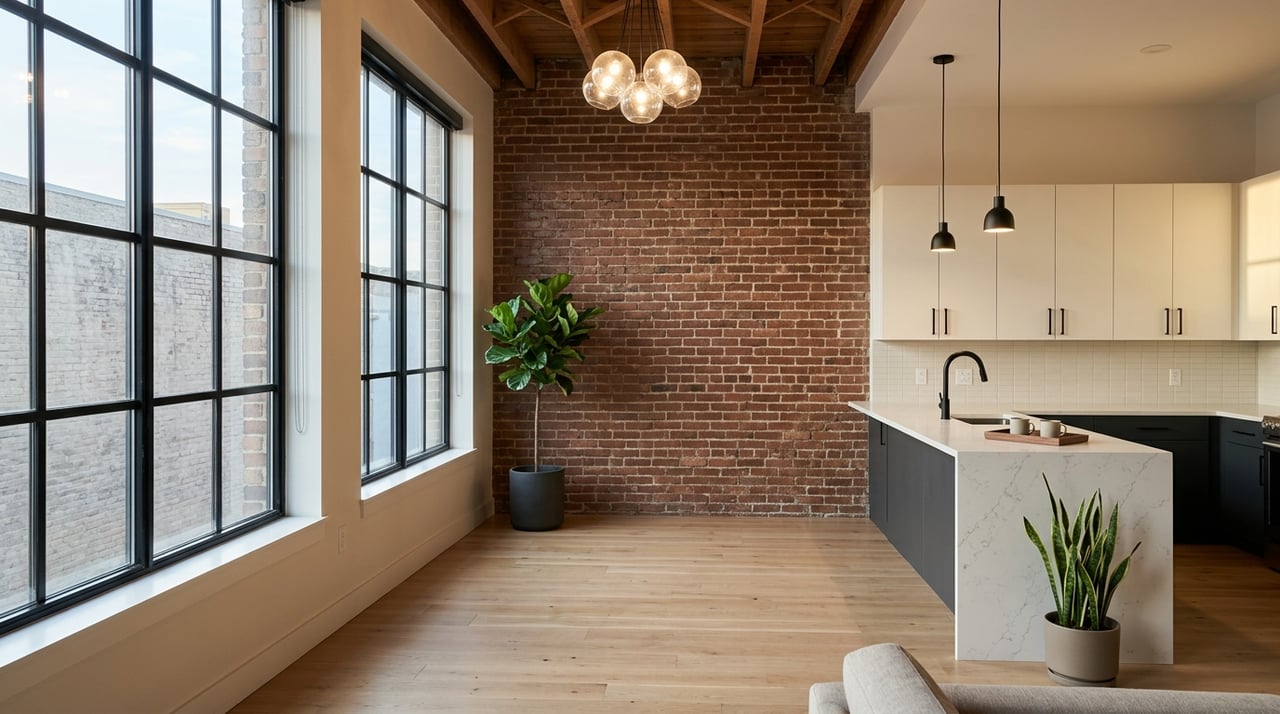
One of the biggest reasons buyers look at lofts is character. In the Warehouse District, the historic building stock is defined by brick-and-timber structures, and city materials note that some residential conversions in these buildings have been successful. That legacy is a big part of what gives downtown lofts their identity.
You may also notice features tied to the area’s industrial past, such as brick cladding and large window openings. Those details help create the look many buyers want when they say they are searching for a true loft feel. Compared with a more conventional condo, these homes often feel more architectural and less cookie-cutter.
In practical terms, older warehouse conversions often lean toward open layouts and preserved industrial details rather than a more traditional room-by-room floor plan. If you love defined formal spaces, that can feel like a compromise. If you prefer light, openness, and character, it can be a major draw.
The biggest lifestyle advantage of a downtown loft is convenience. Downtown Minneapolis offers walkable access to dining, shopping, theaters, museums, sports venues, parks, and riverfront spaces. For many buyers, that means your free time can feel less car-dependent and more spontaneous.
Nicollet adds another layer of convenience because it functions as a pedestrian corridor where motor vehicles are restricted to buses and taxis. That makes it a strong option if being close to shopping, dining, and everyday activity matters to you. Still, the feel there is different from a quieter block tucked into a warehouse area or near the river.
Winter convenience matters, too. The skyway system spans about 9.5 miles and 80 city blocks, connecting many downtown buildings with restaurants and retail. That said, it is important to know that the skyway is not an all-hours amenity. Many connected buildings close around 6 p.m. on weekdays and are closed on weekends.
For buyers who want flexibility, downtown Minneapolis has strong transit access. Metro Transit’s METRO lines generally run at least every 15 minutes during most of the day, and the Blue and Green lines share five downtown Minneapolis stops. Tickets are valid for 2.5 hours, and the Downtown Zone fare is 50 cents.
Buses and trains also accommodate bikes, which adds another option for short commutes and errands. If you like the idea of owning less car, or using your car less often, downtown can support that better than many suburban locations. That is one reason loft living often appeals to buyers who prioritize mobility and convenience.
Bike share and Free Ride buses on Nicollet can also help with quick trips around the core. If you are used to suburban driving patterns, that can be a meaningful shift. Your day may feel more walkable and transit-friendly, but less centered around easy parking right outside your door.
If you plan to drive often, set your expectations early. Downtown streets can be more complicated than suburban street grids because many are one-way, several major highways converge near the city center, and free parking is rare. Event nights can also push parking rates higher.
That does not mean car ownership is impossible. It simply means your experience will likely be less convenient and more planned than it would be in a car-centric neighborhood. For some buyers, that tradeoff feels minor because they value walkability. For others, it becomes a deciding factor.
When you tour lofts, it helps to think beyond the unit itself. Ask yourself how often you drive, when you usually come and go, and whether event traffic would affect your routine. Those practical details can shape your enjoyment of downtown living as much as exposed brick or ceiling height.
One of the most important things to understand is that downtown loft living is not the same everywhere. Near North Loop, the Warehouse District, Target Field, Target Center, concerts, and nightlife, you should expect a busier urban environment. Foot traffic, energy, and ambient noise are part of the tradeoff.
That lively atmosphere is a plus for some buyers. If you enjoy being close to restaurants, games, and events, the buzz can feel exciting and convenient. If you are sensitive to noise or want calmer surroundings, choosing the right block matters a lot.
Other pockets offer a different feel. The Mill District is more closely associated with historic charm and the river, while Nicollet serves as a pedestrian shopping and dining corridor. Even within downtown, your experience can change noticeably from one area to the next.
Loft living downtown often works best if you value walkability, transit access, historic character, and low-maintenance living. It can be a strong fit if you would rather step outside to restaurants, parks, entertainment, or transit than spend time maintaining a yard or relying on a car for every errand. That lifestyle priority matters more than the word “loft” itself.
In practical terms, this often appeals to first-time urban buyers, couples, downsizers, and remote workers who put a premium on location and convenience. If that sounds like you, a downtown loft may feel like a smart lifestyle move as much as a housing choice. The open layouts and central location can support a simple, flexible routine.
On the other hand, buyers who strongly prefer quiet streets, private outdoor space, or easy driving may want to compare different downtown pockets carefully or consider another Minneapolis neighborhood. There is no one-size-fits-all answer. The best fit comes down to how you want your home to support your daily life.
When you start your search, it helps to look at lofts through both a design lens and a lifestyle lens. The design side includes things like windows, preserved industrial details, and the openness of the floor plan. The lifestyle side includes noise, parking, proximity to transit, and how active the block feels at different times of day.
A smart tour checklist can help you compare options clearly:
That kind of practical review helps you move past the romance of loft style and focus on long-term fit. Character matters, but so does routine. The right downtown home should support both.
If you are exploring loft living in downtown Minneapolis, working with a team that understands how these blocks differ can make your search more efficient and more confident. For local guidance on Minneapolis condos, lofts, and urban neighborhoods, connect with Ewing Real Estate Group for a personalized consultation.


Get assistance in determining current property value, crafting a competitive offer, writing and negotiating a contract, and much more. Contact them today.